




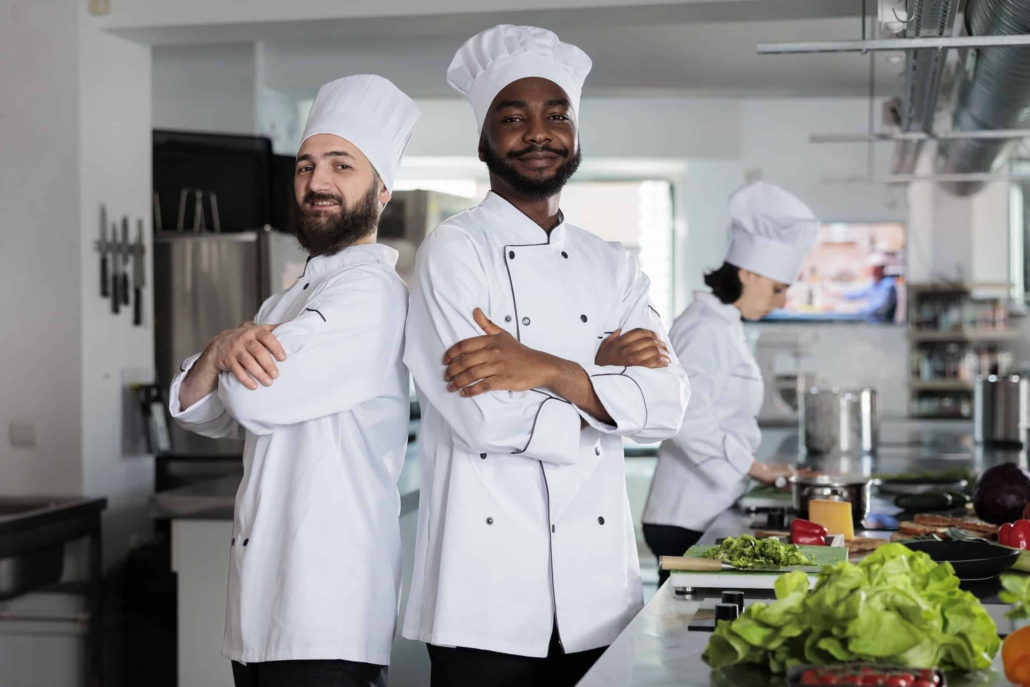
How Chef Coats Impact Kitchen Performance
March is when Southern kitchens start to feel it. Humidity creeps up, temperatures climb, and what felt fine in winter suddenly becomes exhausting. Heat affects everything in a busy kitchen: focus, speed, morale. Most operators look at ventilation or scheduling first, but there’s something else that gets overlooked: the chef coat.
What your back of house wears matters more than you’d think. Heavy, non-breathable uniforms trap heat and sweat, turning an already tough environment into something genuinely uncomfortable. That discomfort slows people down, kills focus, and wears your team out before the dinner rush even ends.
That’s why more kitchens are rethinking chef coat rental as part of how they run service, not just a uniform decision.
Heat and Humidity Change How Kitchens Operate
Southern kitchens do not ease up when the weather changes. Fryers stay hot. Stoves run nonstop. Prep continues whether the air feels dry or heavy. As humidity rises, the kitchen becomes harder on the people working inside it.
According to the Occupational Safety and Health Administration (OSHA), commercial kitchens regularly reach temperatures between 90-100°F, with humidity levels that can exceed 70%. These conditions significantly increase heat stress risk and worker fatigue.
When chef coats do not breathe, heat builds quickly:
- Sweat collects and fabric sticks
- Movement feels restricted
- Discomfort compounds over long shifts
- Chefs move slower and take more breaks
- Fatigue sets in earlier than normal
Research from the National Institute for Occupational Safety and Health (NIOSH) shows that workers in hot environments experience reduced productivity and increased error rates when proper ventilation and breathable clothing are not provided.
A study in the Journal of Occupational and Environmental Hygiene found that kitchen workers wearing non-breathable uniforms reported 35% higher discomfort levels and showed measurable decreases in task performance during peak service hours.
Uniforms that fail to manage heat make the job harder than it needs to be.
Chef Coats Affect Focus During Service
The dinner rush demands concentration. Timing, communication, and precision matter. When chefs feel overheated and uncomfortable, focus slips.
Moisture-wicking, breathable chef coats help regulate body temperature. They allow heat to escape instead of trapping it. When chefs feel cooler, they think more clearly and move with more confidence.
That difference shows up in plating, coordination, and overall kitchen rhythm. Comfort supports performance in ways equipment alone cannot.
Heavy Uniforms Increase Physical Fatigue
Kitchens already push the body. Long hours on your feet, constant motion, and high heat take a toll. Heavy uniforms add unnecessary strain.
A chef coat that holds moisture becomes heavier as the shift goes on. That extra weight pulls on shoulders and restricts movement. Over time, fatigue increases and productivity drops.
Breathable chef coats reduce that burden. Lightweight fabrics move with the body instead of working against it. Chefs finish shifts with more energy and fewer distractions from discomfort.
Performance Starts with What the Team Wears
Kitchen performance depends on many factors, but uniforms play a bigger role than most operators expect. Chef coats touch the body all day. If they work against the chef, performance suffers.
A professional chef coat rental program removes guesswork. Clean, properly designed coats arrive ready for use. Worn or ineffective garments leave circulation before they become a problem.
This consistency supports performance without adding work for kitchen managers.
Chef Coat Rental Simplifies Uniform Management
Managing uniforms in house creates challenges. Coats get washed inconsistently. Some feel heavier than others. Replacement happens only when complaints become loud enough.
Chef coat rental creates uniformity. Every member of the back of house wears apparel designed for the same conditions. Breathable, moisture-wicking fabrics stay consistent across the team.
That uniformity supports teamwork and professionalism while keeping focus.
Comfort Improves Retention in the Back of House
March humidity is only the beginning. Summer heat follows quickly. Kitchens that ignore comfort during this transition risk higher turnover.
Chefs notice when management invests in working conditions. Comfortable uniforms signal respect for the job and the people doing it. That investment builds loyalty and improves retention.
Chef coat rental helps kitchens show they care about performance and well-being without adding administrative burden.
Why Rental Makes Sense During Seasonal Shifts
Seasonal changes put extra pressure on kitchen operations, especially as humidity rises and guest traffic increases. Spring and summer demand more from both staff and systems.
Chef coat rental supports kitchens during these shifts by offering:
- Consistent access to breathable, moisture-wicking coats during hotter months
- Flexible quantities that adjust as staffing levels change
- Uniform quality across the entire team, even during peak periods
- Less time spent managing or replacing worn apparel
This flexibility helps kitchens stay prepared when conditions get tougher and service demands increase. During the busiest months, performance depends on systems that adapt without adding stress to the back of house.
Supporting Kitchen Performance with Loop Linen Service
Back of house teams perform best when their uniforms support the work instead of fighting it. Loop Linen Service provides chef coat rental programs designed for real kitchen conditions, including rising heat and humidity.
Our breathable, moisture-wicking kitchen apparel helps chefs stay cooler, more comfortable, and more focused during demanding service periods.
If your kitchen operates in New Orleans, Baton Rouge, Lafayette, Lake Charles, Gulfport, or Jackson, our team can help you build a chef coat rental program that supports performance when it matters most. Contact us today for more information.